Guides · Security
Best shed security kit: build layers, not a shopping list
A police-sourced guide to shed hasps, padlocks, ground anchors, alarms, hinges and property marking, with Sold Secure ratings explained and named kit from published specs.
Affiliate links: We earn from some links to Wickes through the Awin network. You do not pay more, and it does not change what we recommend. How this works.
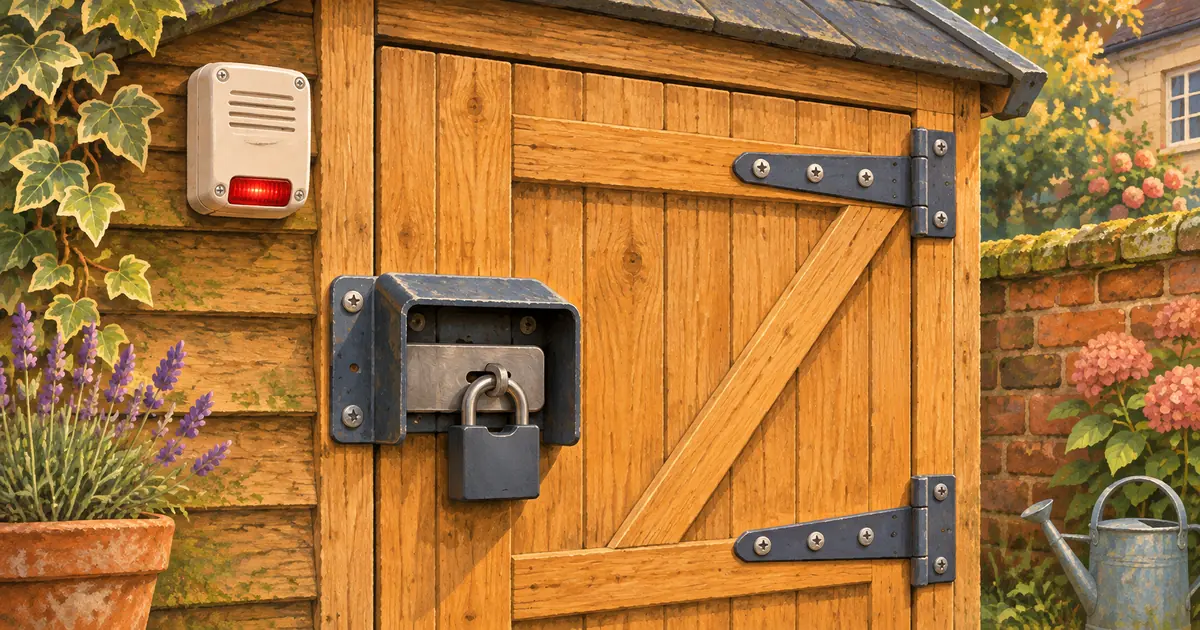
A shed is a lovely thing: a dry home for the mower, the bikes, the good secateurs and that drill you lent your brother-in-law once and got back eventually. Unfortunately, thieves think it's lovely too. The good news is that you don't need to turn your garden into Fort Knox. Good shed security is a chain of modest, sensible layers: a sound building, protected fixings, a decent hasp and lock, something solid to chain things to, and records that help you get stolen kit back. Buying the biggest padlock in the shop cannot rescue a thin door held on with four short screws.
We haven't tested these products. This comparison is based on makers' published specifications and manuals and retailer listings (checked 15 November 2026).
Why sheds get targeted
Secured by Design, the police-backed crime prevention initiative, says sheds and outbuildings are often seen as an easy option and typically hold items that sell on quickly: bikes, mowers, power tools, garden tools and sports kit such as golf clubs. It puts the typical value of shed contents at between £1,500 and £5,000. Its sheds and outbuildings advice adds a second worry: criminals take tools from sheds and use them to break into the house. A spade left by the back door is effectively a free crowbar.
So shed security protects two things at once: what's inside the shed, and the home next to it.
The police checklist, in plain English
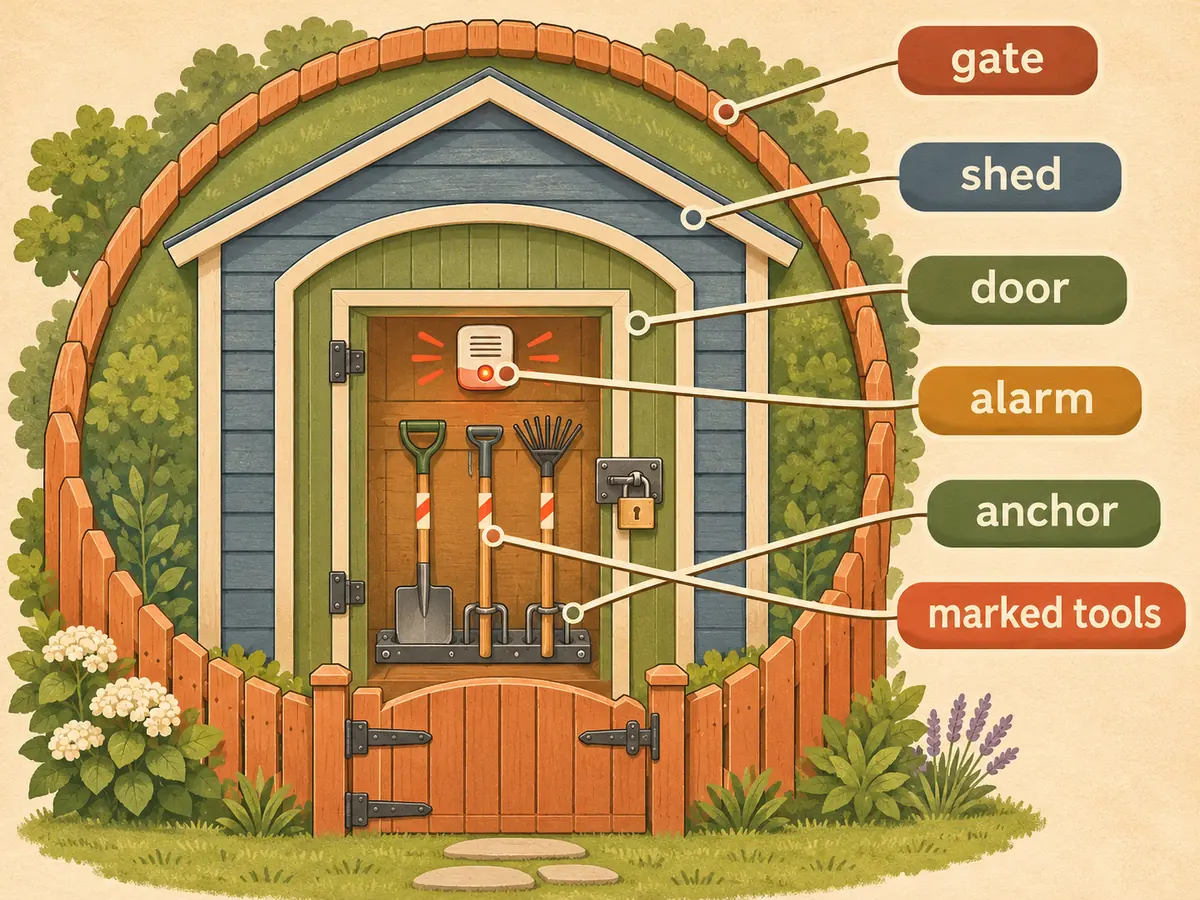
Pulling together both Secured by Design pages, the recommended layers are:
- Anchor the shed. Smaller sheds should be firmly fixed down so they can't simply be lifted to get in.
- Protect the hinges. Use one-way (non-return or clutch-head) screws on hinges so they can't be undone from outside.
- Fit a proper hasp and staple. Secured by Design suggests an SBD-approved hasp and staple that hides its fixings when closed, ideally two of them: one fitted a third of the way up the door and one a third of the way down. Coach bolt them through the structure or use security screws.
- Use a closed-shackle padlock on that hasp, so there is little exposed shackle for bolt croppers.
- Consider a mortice lock if the door is solid and at least 44mm thick: Secured by Design says such a door may take a mortice sash lock to BS 3621. Most budget shed doors are much thinner, so check first.
- Chain valuables inside. Wrap a security chain through bikes, mower handles and tool handles, then lock it to a purpose-made shed shackle on the wall or a ground anchor in the base. A floor-fixed ground anchor needs a concrete base.
- Lock small items away. A strong lockable box or cage, fixed to the floor or structure, suits power-tool batteries and hand tools.
- Deal with the windows. Fit weld mesh or a grille on the inside, screw unused windows shut, swap glass for polycarbonate or Perspex, and use netting or frosting so nothing is on display.
- Add an alarm. A battery shed alarm triggered by movement or door contact is low-key and loud. Keep it out of reach of small children.
- Secure ladders, insure the contents, and mark your property.
Notice how little of that list is "buy a bigger padlock". The door, hinges and fixings matter just as much.
What Sold Secure ratings actually mean
You'll see Sold Secure logos on padlocks, chains, ground anchors and some sheds. Sold Secure uses four main grades. Diamond is its top level, for the highest-threat situations, tested against a specialist tool list. Gold is for high-risk environments and a dedicated tool list. Silver is for higher-risk situations against an enhanced tool list. Bronze is a good level of resistance against the opportunist thief, tested against a basic tool list. The difference between grades comes down to the tools used and how long the attack test lasts.
Two practical points from Sold Secure: ratings are specific to a specification (padlocks, ground anchors and pedal-cycle locks are separate categories), and insurers often specify which grade they want. Check your policy before you buy, and use the Sold Secure approved product search to confirm a current rating rather than trusting a box or a listing.
| Grade | Sold Secure's description | Where it fits at the shed |
|---|---|---|
| Diamond | Top level of resistance; specialist tool list | High-value bikes or e-bikes, high-risk areas |
| Gold | Very good resistance against the dedicated thief | Most bike chains and anchors where theft risk is real |
| Silver | Greater resistance against the more determined thief | Hasps and padlocks on a sound timber door |
| Bronze | Good resistance against the opportunist | Lower-value contents, lower-risk spots |
Named kit from published listings
These are examples drawn from Secured by Design's own product listings and from retailer pages we opened on 15 November 2026. Ratings are quoted exactly as published; always reconfirm before buying.
Police Preferred Specification hardware
Secured by Design's sheds and outbuildings page lists accredited products including:
- Squire STH3 Hasp and Staple: listed with Sold Secure SS303:2020 Silver.
- Mul-T-Lock NE12 Closed Shackle Padlock: listed with Sold Secure SS303:2020 Gold.
- Pragmasis SuperShed Shackle (a wall-fixed anchor point for chains): listed with Sold Secure SS104:2020+A1:2022 Gold.
- Oxford Anchor Force ground anchor: listed with Sold Secure SS101:2020+A1:2022 Diamond.
- Yale Maximum Security Chain in 110cm and 180cm lengths: listed with Sold Secure SS104 Gold and SS106 Silver.
- Shed alarms: battery alarms such as the Minder Vibration Alarm SH-2019 and Solon Defender Ultra Slim Vibration Alarm, listed as SBD "Assessed - Other".
We could not confirm current UK prices for these from a maker or retailer page today, so check stockists directly.
Everyday hardware at Wickes
| Product | Published specification | Rating stated? | Price (Wickes, checked 15 November 2026) |
|---|---|---|---|
| Wickes Heavy Duty Door Hasp & Staple - Galvanised 114mm at Wickes | Galvanised steel, fixings included, padlock required | No | about £7.50 |
| Squire Long Shackle Laminated Double 4 Pin Locking Padlock - 50mm at Wickes | Hardened 9mm steel shackle, double deadlocking, described as medium duty | No | about £24 |
| Squire ATL52S Stainless Steel Weatherproof Padlock - 50mm at Wickes | Solid brass body, stainless steel shackle, double locking, over 200 hours salt-spray testing | No | about £17 |
| Wickes Steel Disc Padlock - 70mm at Wickes | Closed hardened steel shackle, 4-pin tumbler, weather resistant | No | about £5.50 |
None of these Wickes listings states a Sold Secure or SBD rating, so treat them as everyday hardware rather than insurer-grade security. The disc padlock's closed shackle fits Secured by Design's closed-shackle advice; the long-shackle padlock leaves more shackle exposed. Whatever you choose, the hasp is only as strong as its fixings, so through-bolt it where the structure allows.
Fitting tips that matter more than the price tag
- Fix into something solid. A hasp screwed into thin cladding can be levered off. Fix into framing, or add a timber backing block inside.
- Hide the fixings. Choose a hasp that covers its screws when closed, and replace any exposed hinge screws with one-way screws or coach bolts.
- Anchor the building. Follow the shed maker's instructions; see should I anchor a shed? and our shed base options if a ground anchor needs concrete.
- Mind the windows. Windowless sheds remove one weak point; if yours has glass, add an internal grille or swap to polycarbonate.
- Lighting and alarms on mains power must be installed by a qualified electrician and comply with Part P in England and Wales; see can I run electricity to a shed?. Battery alarms avoid wiring altogether.
Mark it, record it, insure it
Secured by Design recommends security marking tools and equipment with an SBD-recognised forensic marking or etching kit as a visible deterrent. For bikes, its bike security advice adds registering on a recognised national database, recording the frame number (normally under the bottom bracket or near the rear dropout) and taking photos. BikeRegister offers free registration on its police-used database, with optional marking kits. Keep receipts and serial numbers for power tools too, and check your household policy covers theft from outbuildings and specifies any minimum lock grade.
If bikes are the main worry
A purpose-built store can make more sense than retrofitting an old shed. Secured by Design lists several police-accredited bike stores, and some makers publish package ratings: Trimetals, for instance, says its ProtectaCycle Gold package is certified to Sold Secure Gold (Pedal Cycle). See our best bike storage sheds guide and how to secure bikes in a shed.
No Amazon products are linked here: we only link Amazon listings we've verified, and we would rather leave a gap than guess.
The Shedworthy verdict
Start with the boring bits (solid fixings, hidden screws, an anchored shed), then add a closed-shackle padlock on a good hasp, a chain to something immovable, and an alarm if you've got bikes or pricey tools inside. Mark everything, write down the serial numbers, and check what your insurer actually asks for. Do that, and your shed becomes the one thieves walk past.
Sources
- Secured by Design: how to secure sheds and outbuildings
- Secured by Design crime prevention: sheds and other outbuildings
- Secured by Design: bicycle security
- Sold Secure: ratings explained
- Sold Secure: approved product search
- BikeRegister
- Wickes: Heavy Duty Door Hasp & Staple, Galvanised 114mm
- Wickes: Squire Long Shackle Laminated Padlock 50mm
- Wickes: Squire ATL52S Stainless Steel Weatherproof Padlock 50mm
- Wickes: Steel Disc Padlock 70mm
- Trimetals: Bicycle Store / ProtectaCycle