Guides · Roofing and care
Stop damp and condensation in a shed
Work out whether shed damp is a leak, ground moisture, blocked ventilation or condensation, then fix it in the right order for timber, metal and plastic sheds.
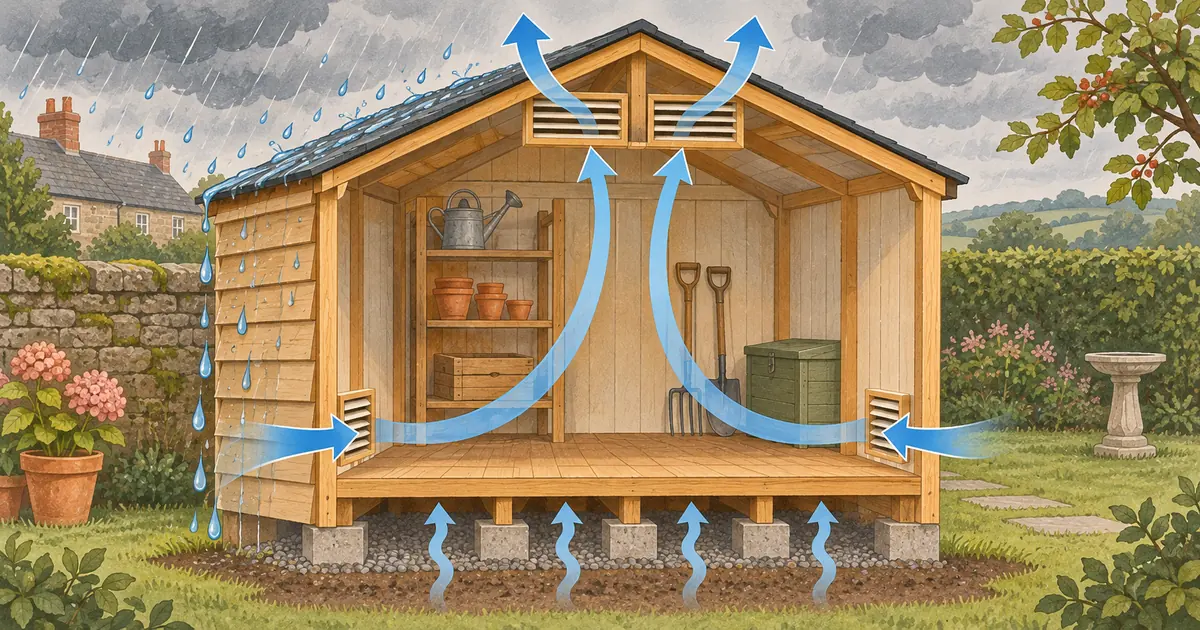
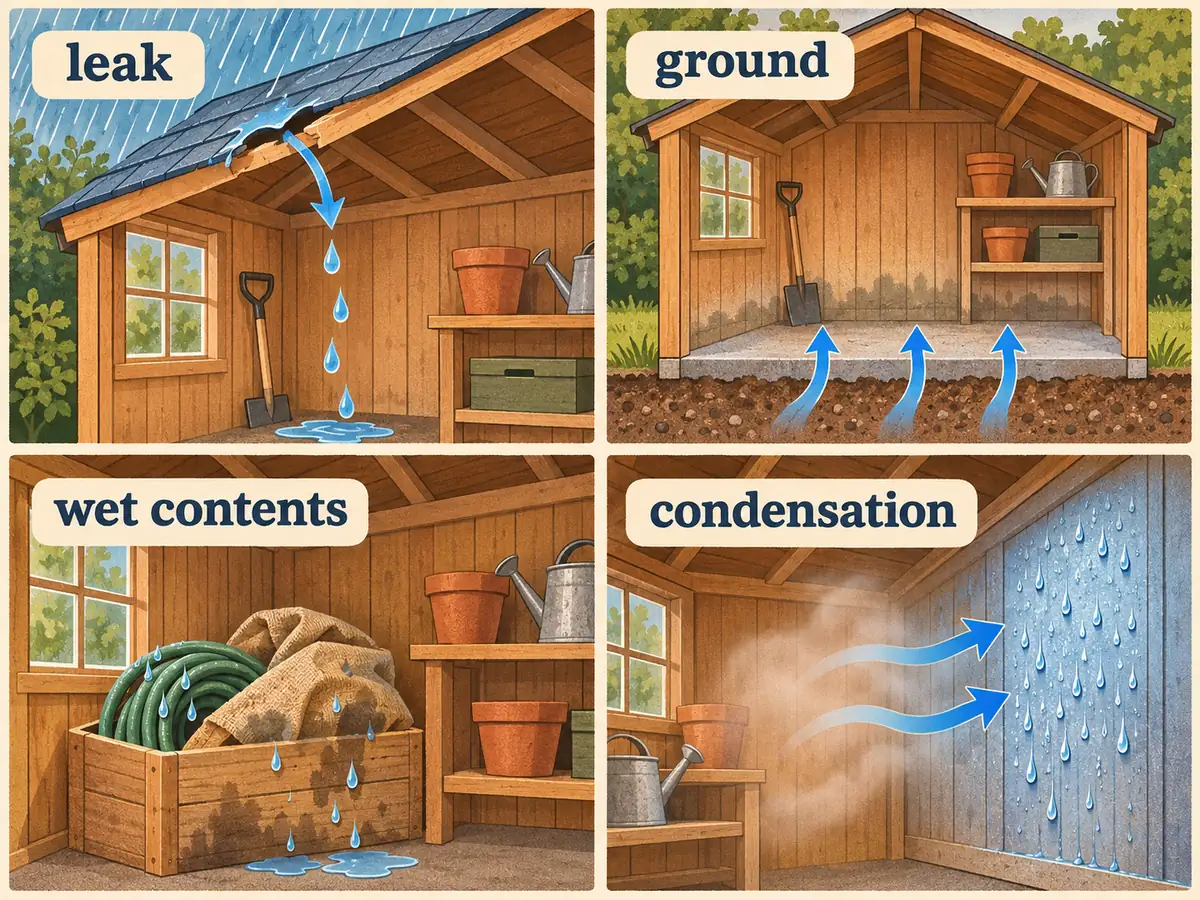
Few things take the shine off a shed faster than opening the door on a chilly morning to find drips on the roof, a musty smell and a rusty spanner. The good news is that shed damp nearly always has a findable cause. Water can get in through a roof or wall defect, rise or splash up from the base, arrive on wet bikes and tools, or condense when humid air meets a cold surface. The trick is to work out which one you've got before you start sealing, lining or buying gadgets, because the wrong fix can make things worse.
Why it matters
For timber sheds, persistent wet is the road to rot. The Wood Protection Association says the risk of fungal and insect attack increases significantly if the moisture content of wood rises above 20%, and lists persistent condensation and damp among the causes, alongside poor installation and maintenance (WPA). For metal sheds the worry is rusty contents and damp stored goods; for plastic sheds, mould and soggy cardboard. Either way, it's worth sorting.
What condensation actually is
Asgard's guidance puts it simply: condensation happens when surface temperature, air and water vapour meet, leaving droplets on walls, ceilings and other surfaces. The risk depends on how moist the air is and how cold the shed surfaces are, and a poor choice of location can increase it (Asgard condensation guide). Thin metal roofs cool quickly overnight, which is why they're the classic place to see it, but any cold surface can collect moisture.
Diagnose first: leak, ground, contents or condensation?
| Clue | Most likely cause | Where to look |
|---|---|---|
| Drips or dark tracks in one spot, worse during or after rain | Leak | Roof covering, felt nail lines, ridge, door and window seals, base fixing holes |
| Damp floor edges, swollen bottom boards, puddles after heavy rain | Ground water or splashback | Base level and drainage, bearers, soil or plants touching walls |
| Wet patches under where bikes, mowers or tools stand | Moisture carried in | The items themselves; spillages left to evaporate |
| Fine droplets across the underside of a metal or plastic roof on a cold, dry morning | Condensation | Ventilation, nearby hedges or walls, humid contents |
Inspect on the right day. Look during or just after rain for local drips and failed roof edges. Look on a cold, still, dry morning for widespread droplets; that pattern is more consistent with condensation than a leak.
Common leak points by shed type
Metal sheds. Asgard says water getting into its sheds is most likely an installation issue: a base that isn't level so the doors misalign, or rubber bungs missing from the pre-drilled fixing holes in the base. It calls missing or wrongly fitted bungs the most common cause of water ingress, and says bolts must go in straight if the shed is bolted down (Asgard). Our knowledge-base answer why is my metal shed wet inside? walks through the checks.
Timber sheds. The roof felt is the usual suspect. Forest Garden's assembly guide warns against tacking through a single layer of felt on sky-facing parts of the roof because water can run down the tack into the roof board; it recommends overlapping sheets from the lowest point upwards and tacking through two layers where they overlap (Forest Garden shed guide). It also explains that wall panels are designed so the bottom board laps over the floor edge to keep rain out, so a panel fitted upside down can leak. If your felt is tired, see shed felt vs EPDM vs shingles.
Plastic sheds. Keter notes that windows can help airflow but must be well sealed, as poorly sealed windows can let in water (Keter). Check panel joints, the roof-to-wall junction and the door sill after rain.
Fix the ground side
- Get the shed off the ground. Forest Garden says sheds should sit on pressure-treated bearers, which let air circulate under the floor and stop damp rising through the timbers (Forest Garden buying guide).
- Use a proper base. Trimetals asks for a well-constructed, dry, level base slightly larger than the shed, with edges smoothed and angled to direct water away (Trimetals FAQ); Asgard asks for a base at least 50mm thick (Asgard). Size yours with the shed base calculator and compare options in shed base options and costs.
- Avoid low spots. Forest Garden warns never to site a shed where it could flood, because standing water speeds up rot.
- Clear the walls. Prune back vegetation touching the shed; Forest Garden says it can act as a conduit for moisture (care guide).
Fix the air side
Ventilation is the makers' common thread. Asgard builds vents into its roofs and says they only work if air can circulate around the shed; it warns that siting too close to conifers, trees, shrubs or a wall increases the risk, because foliage gives off moisture overnight and walls stop air flowing (Asgard). Its FAQ adds that you must follow the installation guide so the shed is correctly situated to reduce the condensation risk. Trimetals also says to avoid plants or bushes close to the shed (Trimetals FAQ). Keter says plastic sheds may be prone to dampness if not properly ventilated (Keter), and Forest Garden says keeping timber buildings ventilated matters because moisture trapped between non-breathable layers can rot floors (care guide).
So: keep vents open and clean, leave a gap between the shed and fences or hedges, and don't cover the floor with a non-breathable sheet that traps water underneath.
Fix the contents side
- Let things cool and dry. Asgard says putting a hot bike into a cold shed causes moisture and asks owners to let it cool before closing the doors; it also notes that a muddy, wet bike drying off inside adds moisture (Asgard).
- Mop up spills. Asgard warns that water left inside will keep evaporating and condensing, giving the impression of a constant leak.
- Brush off snow. Asgard recommends clearing snow and ice from the roof.
- Leave air gaps. Keep stored items off walls and use shelving rather than piling things on the floor.
- Check stored goods. For long-term storage, Asgard advises checking contents periodically and drying any moisture promptly; for persistent problems it suggests a domestic moisture trap.
Mould on timber
Forest Garden says mould is a surface fungus that discolours timber but does not itself cause rot, and that a good preservative containing a mildewcide is the best preventative; a proprietary mould remover with mildewcide deals with an established outbreak (care guide). Treat mould as a sign that something upstream needs fixing.
A sensible order of work
- Make the roof and wall details weather-tight using compatible materials.
- Correct pooling, soil contact and blocked drainage around the base.
- Restore designed ventilation and clear foliage from around the shed.
- Reduce moisture brought inside.
- Only then consider insulation or lining, and get appropriate building advice on vapour control; lining over hidden wet timber can let decay go unnoticed.
Mould, structural softness or electrical equipment in a wet building deserves caution. If you're thinking of a mains-powered heater or dehumidifier, the supply must be safe for a damp outbuilding: use a qualified electrician (notifiable work falls under Part P in England and Wales), follow the appliance maker's manual, and see can I run electricity to a shed?.
Keep it dry, keep it worthy
Most shed damp comes down to three things: water getting in, air not getting round, and wet things going in. Tackle them in that order and you'll usually win without spending much at all. A level base, clear vents, a bit of elbow room from the hedge and a dry bike will do more than any gadget, and your tools will be all the happier for it.