Guides · Roofing and care
Pressure-treated vs dip-treated sheds
What pressure treatment and dip treatment really mean for a UK timber shed, what the guarantees ask of you, and why cut ends, bases and roofs still matter.
Affiliate links: We earn from some links to Wickes through the Awin network. You do not pay more, and it does not change what we recommend. How this works.
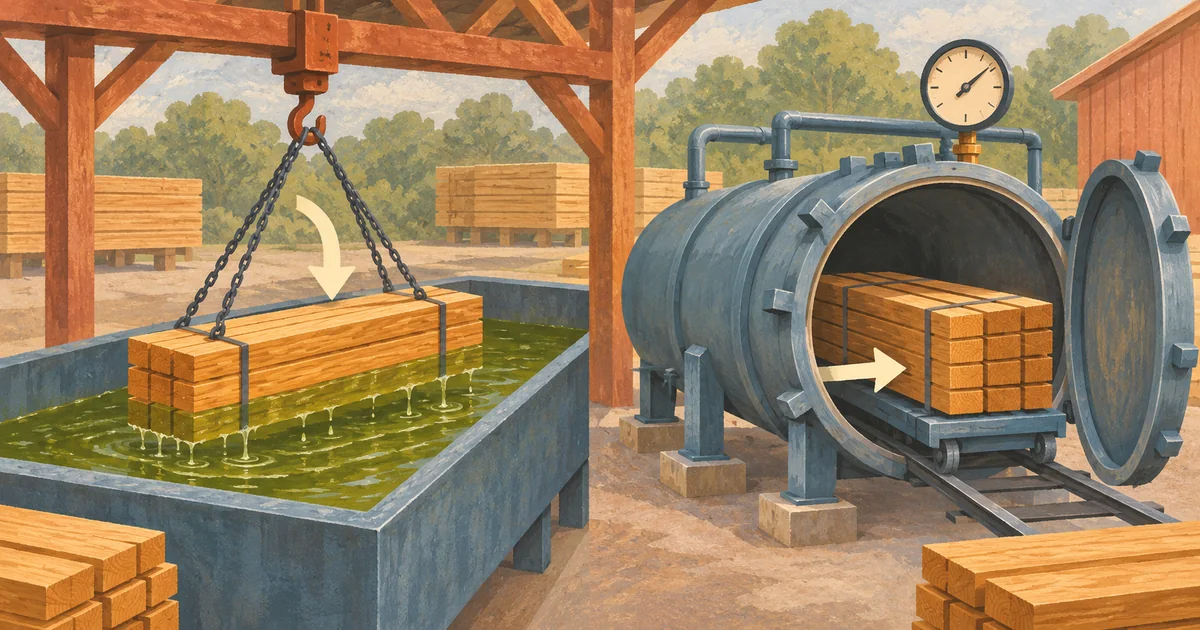
Two timber sheds can look almost identical in the listing photos and still ask very different things of you once they're built. One wants a fresh coat of preservative every year; the other is happy to be left alone apart from the odd cut end and a tidy-up. The difference is usually the factory treatment: pressure treatment or dip treatment. Neither makes a shed immune to standing water, a leaky roof or a forgotten saw cut, but knowing which you're buying tells you how much brush-work is heading your way.
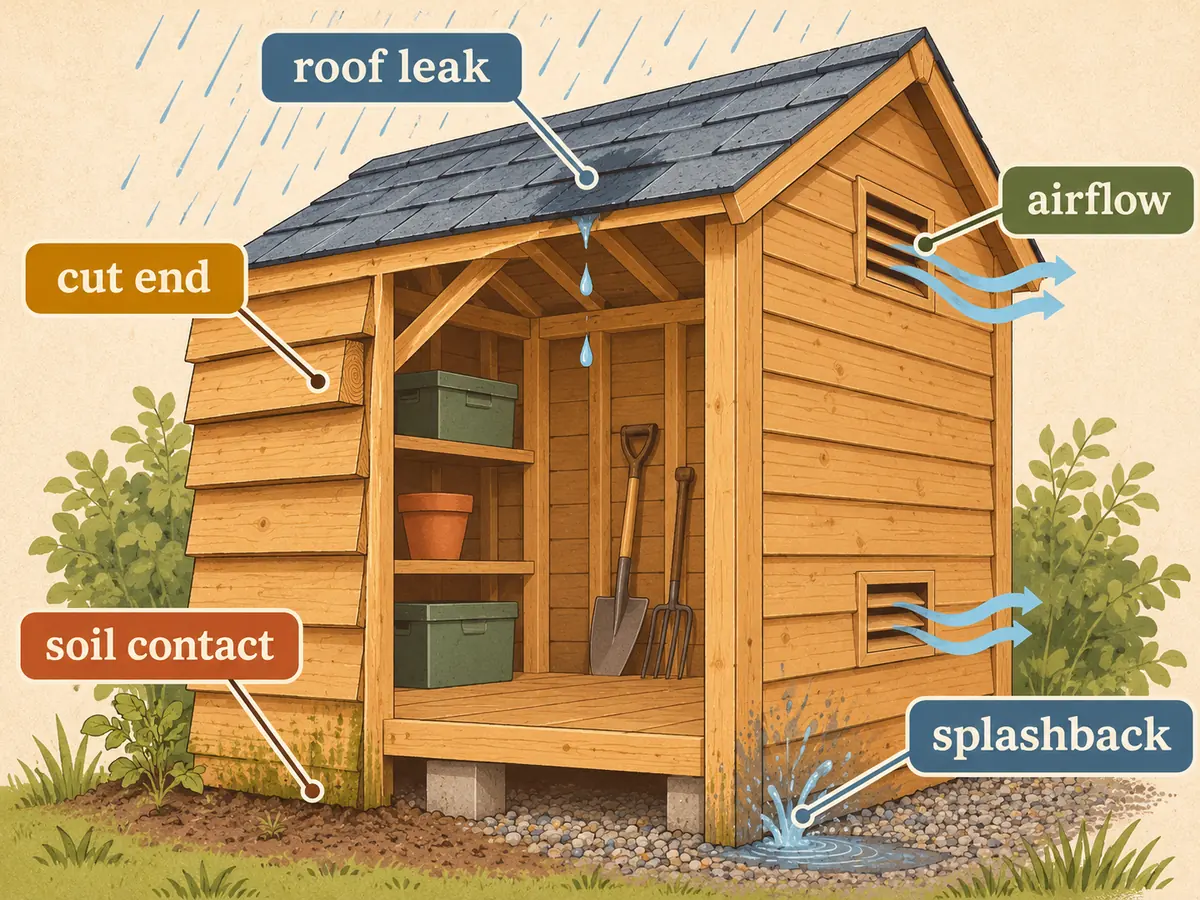
Why timber needs protecting at all
The Wood Protection Association (WPA) explains that sapwood is always vulnerable to fungi and insects, and that the risk of attack rises significantly if the moisture content of wood goes above 20%. It lists where the timber is used, poor installation, poor maintenance and persistent condensation and damp as causes (WPA: preservative treatments). It also notes that modern timber is more likely to contain a high proportion of low-durability sapwood than in years gone by.
So the job of any treatment is to buy time against that wet-wood risk. How much time depends heavily on how the preservative gets into the wood.
Pressure treatment: what it is
Pressure treatment (the WPA calls it industrial vacuum-pressure impregnation) is done by specialist plants in large sealed pressure vessels under factory-controlled conditions (WPA). Forest Garden describes the process in shed terms: timber is loaded into a tank, a vacuum removes the air, then the tank is flooded with preservative under pressure so it is drawn deep into the timber before drying (Forest Garden buying guide). Mercia describes the same vacuum-then-pressure sequence for its optional pressure-treatment service (Mercia).
The WPA is clear on why method matters: brush, dip or spray products give a degree of protection, but for extended service lives of 15, 30 or 60 years, typically only wood pre-treated by an industrial penetrating process can give the required protection for the life of the component (WPA).
Expect the look to be different, too. Forest Garden says pressure-treated timber can have a greenish tinge when new that greys over time, and that green spotting from treatment residue is normal; it recommends letting it dissipate before painting or staining (care guide).
Dip treatment: what it is (and isn't)
"Dip treated" doesn't mean the same thing at every maker, which is exactly why you need to read the small print.
- Forest Garden guarantees dip-treated products against rot, but its guarantee conditions say they must be re-treated every year with a suitable timber preservative and must not be installed in direct contact with the ground.
- Waltons says its buildings are dip treated as standard with a water-based colourant for protection in storage and transit, and that this is not a preservative: the building needs a preservative and waterproofing top coat as soon after construction as possible to validate its 10-year anti-rot guarantee (Waltons).
- Mercia's buying guide uses the same wording for its dip-treated buildings (Mercia).
Forest Garden also notes that dip-treated colour is not permanent, so regular treatment is needed to keep the factory finish (care guide).
Side by side
| Pressure-treated | Dip-treated | |
|---|---|---|
| How it's applied | Vacuum and pressure in a sealed industrial vessel | Surface dip at the factory |
| Depth | Drawn deep into the timber | Surface coating |
| Typical maker guarantee (checked 15 November 2026) | Forest Garden: 25-year anti-rot; Waltons: 15-year anti-rot (with a waterproof coat after installation and annually) | Waltons and Mercia: 10-year anti-rot; Forest Garden: guaranteed against rot with annual re-treatment |
| Your ongoing job | Treat any cut, notch or drill hole; Forest Garden says no annual re-treatment needed | Apply preservative after building (Waltons, Mercia) and re-treat every year (Forest Garden) |
| Ground contact | Still keep on a proper base and bearers | Must not be in direct ground contact (Forest Garden) |
| New appearance | Natural, sometimes greenish, greys over time | Factory colour that fades without upkeep |
Sources for the table: Forest Garden buying guide, Forest Garden guarantee, Waltons and Mercia. Notice that even "pressure-treated" means different upkeep at different makers: Waltons attaches its 15-year guarantee to a waterproof treatment once installed and annually thereafter. Pressure treatment reduces the burden; it doesn't always remove it. See is pressure-treated maintenance-free?.
Cut ends: the bit everyone forgets
Sawing, notching or drilling pressure-treated timber can expose wood the preservative hasn't fully protected; the Wickes listing for one cut-end product describes cuts, drill holes and notches "where untreated wood is exposed". Forest Garden's guarantee requires pressure-treated timber that is cut during assembly or afterwards to be treated with a suitable preservative to re-seal it (guarantee), and its care page warns that skipping this may reduce the effectiveness of the treatment (care guide).
Dedicated end-grain products exist for exactly this. Barrettine Timber Cut End Preserver - Clear - 1L at Wickes is described as formulated for cuts, drill holes and notches in pressure-treated timber; Wickes lists it at about £22, a brush-applied solvent-based product with 12 hours' drying time and a "very high" VOC rating (checked 15 November 2026). Use it outdoors or with good ventilation and follow the label.
For a dip-treated shed's first and annual coats, a general-purpose preserver is the usual starting point. Cuprinol Wood Preserver - Clear 5L at Wickes is listed at about £37 for 5 litres, water-based, with coverage of up to 5 m² per litre with two coats (checked 15 November 2026). Check that whatever you buy meets your shed maker's guarantee wording; some ask specifically for a preservative plus a waterproofing finish.
Treatment is not a roof
Whatever the treatment, water management does the heavy lifting:
- Build on a firm, level base with pressure-treated bearers lifting the floor; Forest Garden says bearers let air circulate and stop damp rising through the floor (buying guide). Plan yours with the shed base calculator.
- Don't site the shed where it could flood; Forest Garden says standing water accelerates rot.
- Keep plants and soil off the walls and clear leaves off the roof (care guide).
- Replace leaking felt promptly: see shed felt vs EPDM vs shingles.
- Keep vents clear, because trapped moisture leads to rot; see damp and condensation in sheds.
Which is better?
Pressure treatment usually wins on long-term peace of mind, especially in damp, shady or exposed gardens, and the WPA's guidance backs the principle that deep industrial treatment outperforms surface treatment for long service lives. But a dip-treated shed that is properly coated after building, re-treated every year and sat on a dry base can be perfectly serviceable, and it often costs less up front. Compare the whole package: cladding, floor, roof, doors, guarantee length and, crucially, the conditions attached. For how often to get the brush out, see how often to treat a timber shed.
So, are you a once-a-year painter or a set-and-forget sort? Be honest with yourself before you buy, and your shed will thank you for years.
Sources
- Wood Protection Association: preservative treatments
- Forest Garden: buying guide to garden sheds
- Forest Garden: our guarantee
- Forest Garden: caring for your products
- Waltons: ultimate shed buying guide
- Mercia: shed buying guide
- Mercia: pressure treatment service
- Wickes: Barrettine Timber Cut End Preserver - Clear - 1L
- Wickes: Cuprinol Wood Preserver - Clear 5L