Guides · Materials
Timber vs metal vs plastic sheds
A balanced, research-based comparison of timber, metal and plastic garden sheds for UK gardens, covering upkeep, condensation, bases, security, repairs and guarantees.
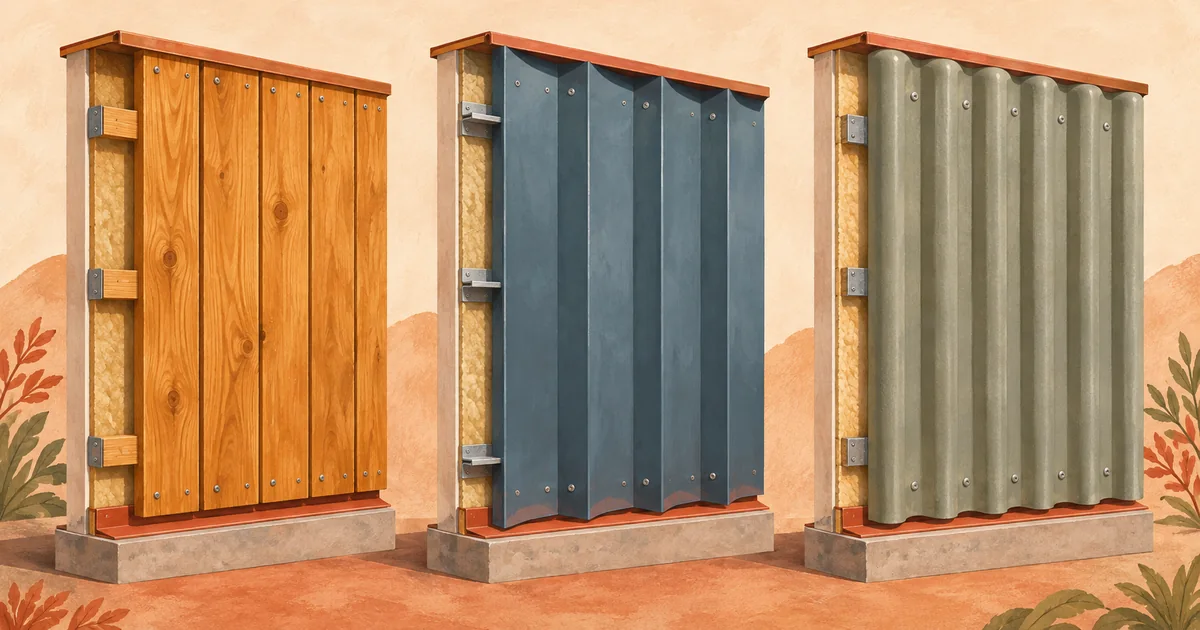
Timber, metal or plastic? It's the great garden-shed question, and it tends to get answered with more passion than evidence. The honest answer is that each material is good at different jobs. Timber is repairable and easy to fit out, metal cuts routine coating work, and moulded plastic is washable and light. Those are tendencies, not guarantees: construction quality, the base underneath and where you put the thing can easily reverse a tidy-looking ranking. This guide sets out what the makers themselves say about each material, so you can pick the one that is genuinely worthy of your shed space.
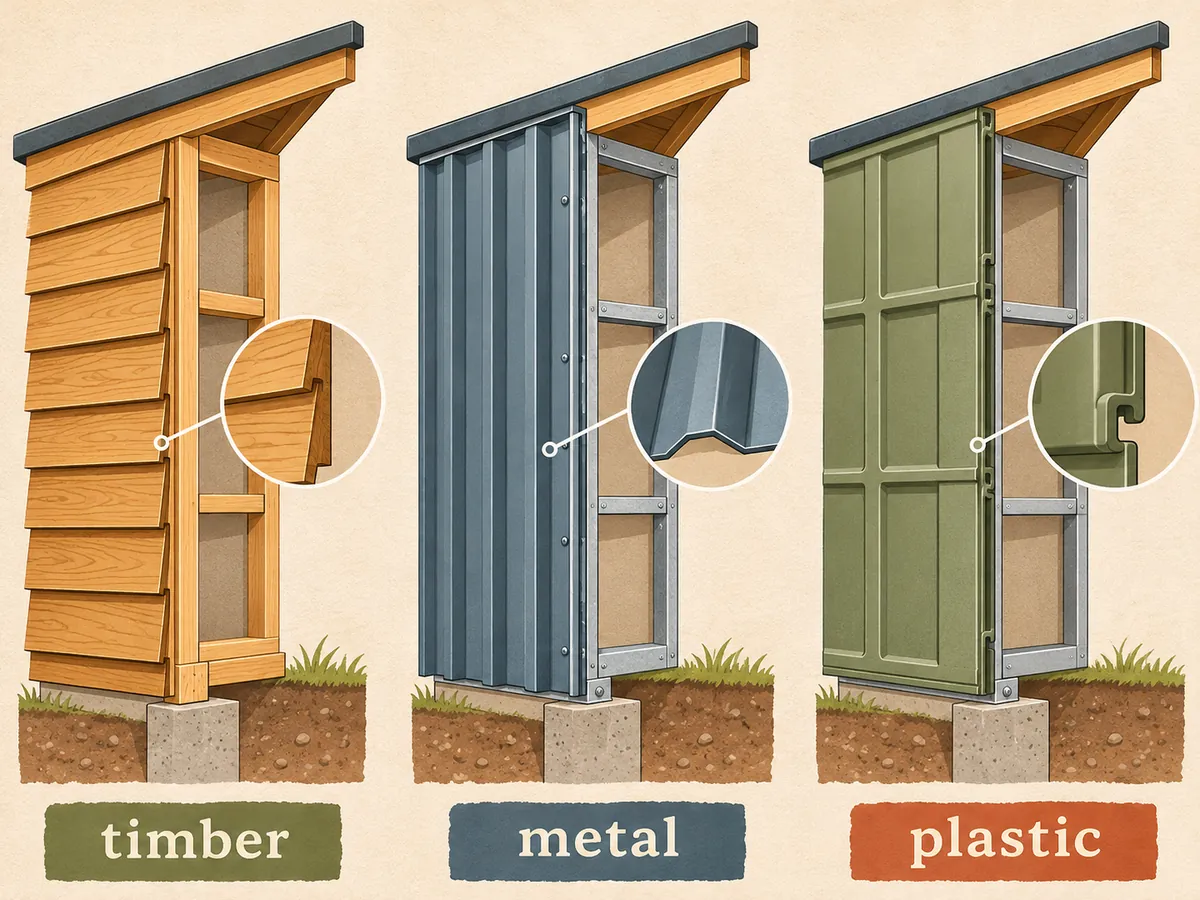
The quick comparison
| Timber | Metal (steel) | Plastic (resin) | |
|---|---|---|---|
| Routine upkeep | Treatment and roof checks, depending on how the timber was treated | Low; keep base, seals and vents in good order | Low; wash panels, check fixings |
| Main worry | Rot, from persistent wet and ground contact | Condensation and poor installation letting water in | Whether roof, doors and shelving are reinforced enough for your use |
| Fitting shelves and hooks | Easy: screw into the frame | Best done with the maker's shelving kits; check before drilling panels | Usually limited to maker-designed shelving and hooks |
| Repairs | Local repairs with ordinary timber | Model-specific panels and fixings | Model-specific parts, often sold as spares |
| Typical use | Storage, workshop, potting shed | Secure storage for tools and bikes | Storage for garden kit, bins and toys |
| Indicative cost band (Waltons guide) | £200–£1,800 | £200–£1,000 | £300–£700 |
The cost row comes from the comparison table in the Waltons shed buying guide, checked 15 November 2026. Treat it as one retailer's broad band, not a market survey; prices change with size, season and spec, so always check the current listing.
Timber sheds
Timber is the traditional choice, and Waltons' guide sums up its appeal as easy to work with and customisable, with annual treatment, visual checks and re-felting listed as the maintenance price you pay (Waltons).
How much work a wooden shed needs depends mostly on two things: the factory treatment and the cladding. Forest Garden's shed buying guide says its pressure-treated sheds need no annual re-treatment, while its guarantee conditions say dip-treated products must be re-treated every year with a suitable preservative to keep the anti-rot guarantee. That difference is big enough to have its own guide: see pressure-treated vs dip-treated sheds. Cladding matters too, because overlap boards move more than interlocking shiplap or tongue-and-groove; see overlap vs shiplap vs tongue-and-groove.
Timber also behaves like timber. Forest Garden's care page explains that panels shrink in dry weather and swell in winter, and that splits along the grain are normal and usually close again. If you like the idea of a shed you can fix with a saw, a few screws and an offcut, nothing else comes close.
Choose timber if you want to fit benches, shelves and hooks wherever you like, plan to spend time inside, or want a shed that blends into a planted garden.
Metal sheds
Most garden metal sheds are galvanised steel with a factory coating. Trimetals, for example, describes its units as PVC-coated galvanised steel with a 25-year panel guarantee against rust perforation (Trimetals). Asgard describes heavy-gauge galvanised steel with a built-in metal floor (Asgard), and Biohort lists galvanised, polyamide-enamel-coated steel plate on its UK site and advertises a 20-year guarantee, with an asterisk pointing to its terms (Biohort). Read the actual guarantee wording: "against rust perforation" is narrower than "against rust".
The catch with metal is moisture. Asgard's condensation guidance explains that condensation forms when moist air meets a cold surface, and that most water problems in its sheds come from installation: an unlevel base that misaligns doors, or missing rubber bungs in the base fixing holes. It also asks owners to keep the shed away from trees, shrubs and walls so air can move through the vents. Trimetals' FAQ says condensation can occur in any metal shed without proper preparation and calls for a dry, level base slightly larger than the shed. Our damp and condensation guide and the knowledge-base answer on why a metal shed is wet inside go further.
Metal sheds also get warm in strong sun. Asgard suggests partial shade if you store heat-sensitive items (Asgard).
Choose metal if low routine maintenance and security for bikes or tools matter more than fitting out the inside. Compare models in best metal sheds.
Plastic (resin) sheds
"Plastic" and "resin" are used interchangeably; the FAQ on Keter's sheds page says a resin shed is essentially a type of plastic shed (Keter). Keter describes its sheds as polypropylene resin, UV-protected, and not needing annual treatment. The same page cautions that plastic sheds may be prone to dampness if not properly ventilated, and recommends looking for ventilation features.
Plastic sheds are generally modular kits. Keter's FAQ recommends a wooden or concrete base for its larger sheds, says to leave clearance all round for assembly including room for a step-ladder, and notes that external dimensions include the eaves overhang, so the floor footprint is smaller than the headline size. It also sells spare parts, which is worth knowing because panels and clips are model-specific.
Being light is both a strength and a weakness. A plastic shed is easy to move and build, but it needs fixing down in exposed spots; see do plastic sheds need anchoring?.
Choose plastic if you want washable, rot-free storage for garden kit and bins with minimal upkeep. Compare models in best plastic sheds.
What all three have in common
- A proper base. Forest Garden says sheds should not be put straight on grass or soil (Forest Garden); Trimetals says grass or gravel is unsuitable for its metal sheds (Trimetals FAQ). Work out size and materials with the shed base calculator and compare options in shed base options and costs.
- Ventilation and space around the walls. Every maker above links damp to blocked airflow or nearby vegetation.
- Good doors and locks. Any material can have flimsy doors or excellent ones; see the shed security guide.
- Planning checks. Material doesn't change the planning position. In England a typical garden shed is likely permitted development, subject to the height, size and siting limits set out by the Planning Portal, but check with your council if in doubt. Scotland, Wales and Northern Ireland have their own rules; our shed planning rules guide covers the details.
Life-cycle thinking
Before you buy, ask three questions. How is a damaged panel repaired? Are spares available, and for how long? Can the building be dismantled and moved? Timber usually accepts local repairs but needs moisture management. Coated steel needs scratches dealt with as the maker directs, because the coating is part of the rust protection. Plastic avoids rot and rust but relies on model-specific clips and panels. If you need a heated, insulated room rather than storage, that's log cabin or garden room territory and beyond the scope of this guide.
So which one?
If you want a workshop, a potting bench or simply the joy of hanging things exactly where you want them, timber earns its keep. If bikes and expensive tools are going in, a well-installed steel shed is hard to beat. If you just want somewhere tidy and wipe-clean for the mower and the kids' toys, resin is a sensible, low-fuss choice. Whatever you pick, a level base and a bit of breathing space around it will do more for its lifespan than the material label ever will. Happy shedding.
Sources
- Waltons: ultimate shed buying guide
- Forest Garden: buying guide to garden sheds
- Forest Garden: caring for your products
- Forest Garden: our guarantee
- Keter UK: sheds and resin shed FAQ
- Keter UK: FAQ
- Asgard Secure Steel Storage
- Asgard: how to stop condensation in a metal shed
- Trimetals
- Trimetals: FAQs
- Biohort UK
- Planning Portal: outbuildings